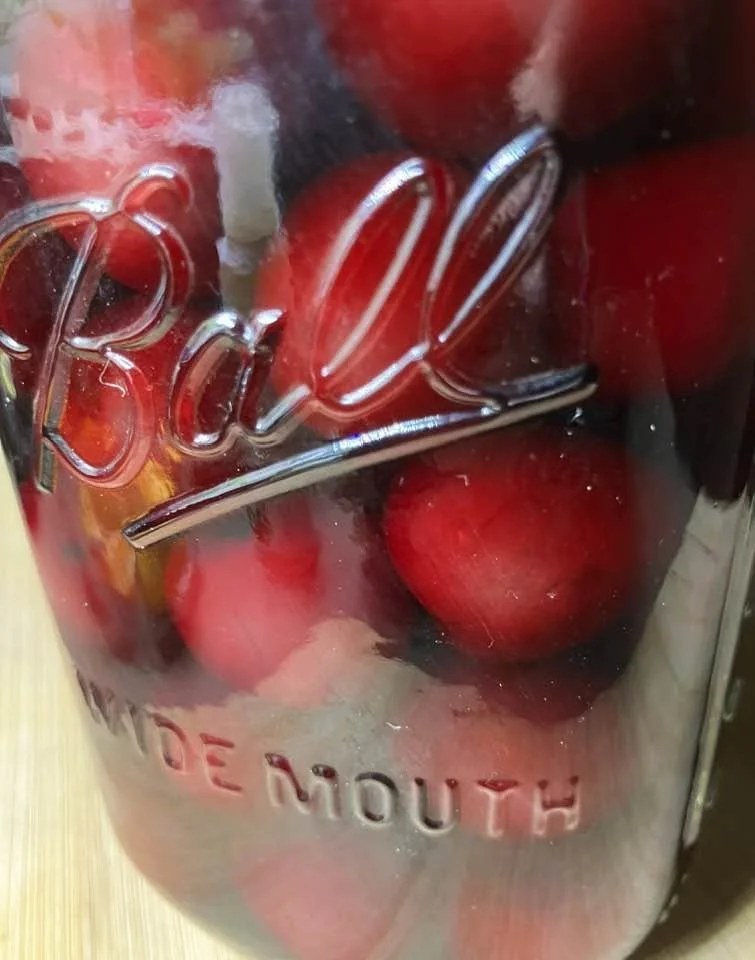
There’s nothing like a good Mason jar. Depending on size, there’s a lot you can do with one. Mine are kitchen aids that store grains, seeds and pasta in the pantry and hold liquid items like sourdough starter in the fridge. I also use them to put home-grown lemon balm in water to make sun tea.
Some say this fondness makes me retro. And my reply? “Lover of the anachronic sounds more poetic.” There’s something about using old fashioned equipment like Mason jars, first patented in1858, and doing things grandparents and great-grandparents did that feels like continuity; an honoring of a worthy tradition.
And in a world full of fractures, consistency over time feels both comforting and sane.
**
Gasoline and diesel are big news these day. Prices for both are crazy high, higher than they’ve been since the pandemic and projected to go higher. A faraway war made this happen. A war that’s stopped the normal movement of fuel to places both here and around the world. A war that no one in their right mind needed or wanted. Madness is endemic to the ruling class, an outgrowth of their greed. And now absolutely everything must be made in their distorted image.
Fossil fuels are forms of energy that move not only people but also the things they need from place to place. Like everyday goods and food. And when prices go higher for that energy because of scarcity, in this case one that’s manufactured, so do the prices for everything else. But it’s not just gas or diesel that’s the issue: it’s also tariffs on almost everything, including tinplate from China. That metal is used to make the lids that cover Mason jar mouths and the rings that keep the lids in place throughout the sealing process.
**
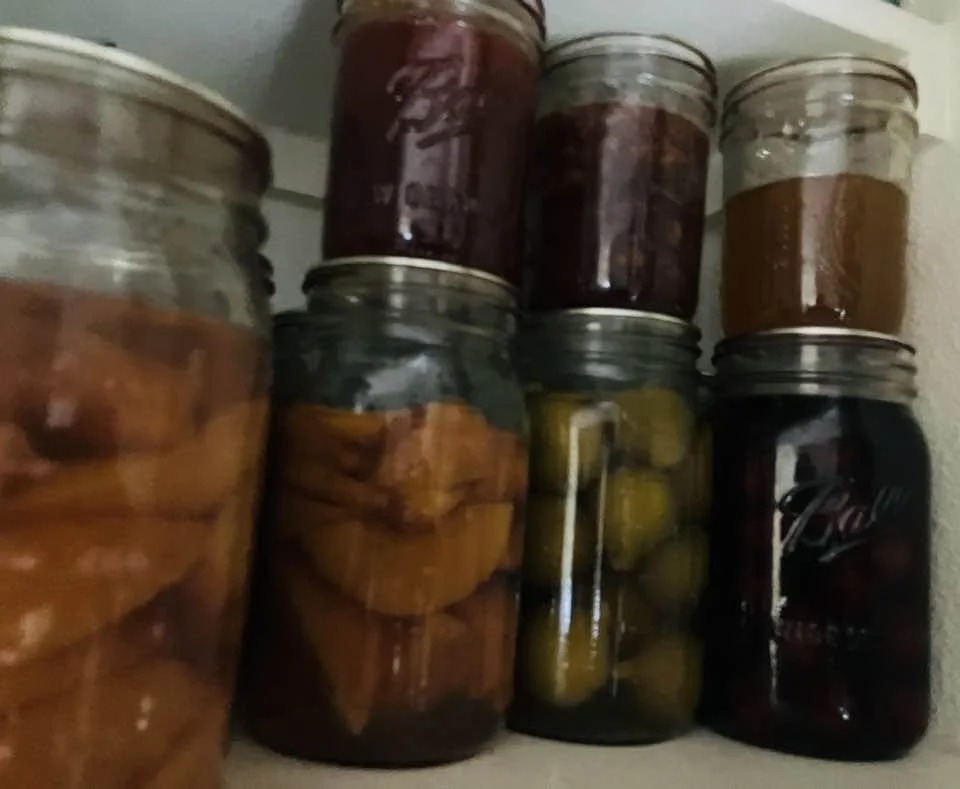
Home canning began as a fun summer project. A YouTube food preservation channel I started watching late last spring got me interested enough to try it. After success canning sunburst cherry tomatoes from my garden, it was a short stretch to what another YouTuber referred to as OCD: “obsessive canning delight.” It wasn’t just the satisfying “pop” of cooling lids to indicate an air-tight seal has formed. It was the sustainability of the process and the tools involved.
Glass jars and the metal rings that hold down the lids, for example, can be used again; and sometimes, so can the lids, depending on how carefully they are pried off. Those small circles with the pink rubber undersides are the only parts that need periodic replacement. The tin and steel cans from the supermarket have grown increasingly expensive. They represent a potential waste of resources if not well-stewarded because not everyone who buys food in recyclable containers those cans get processed for reuse.
Then there’s the element of choice. Canners can pick what they want to preserve rather than depend on what they find at the supermarket. For fruits which is what I work with, that usually means—apart from tomatoes—pineapples, peaches, mandarin oranges and sometime, pears. And they can use simple preservatives like lemon juice or sugar. The process takes work, care and attention. But the final product will have none of the chemical additives of store-bought cans and will cost less.
**
Wars in faraway places have a habit of doing things that go beyond scarcity creation. Sometimes they can do things like spread and mutate, just like COVID-19 did. So far this war has remained, for now at least, more or less contained. But there are whispers that it may eventually take other forms that don’t involve military strikes. Forms that involve taking down—if only temporarily—the infrastructure of reckless aggressor nations that involve water, the internet and electricity.
A Slovenian woman owns the YouTube channel where I picked up the basics of home canning. Preserving food helped her family manage disruptions to food and to electricity for things like light and stoves when Slovenia briefly went to war with Yugoslavia in 1991. That story is why tuned in and learned. In America’s own war, distance offers some protection against military attack, but not against internal sabotage.
Our infrastructure is a prime target; that includes the aging power grid here in Texas. Those of us who live in the state know that grid is held together by industrial strength Band-Aids, prayer and not much else. Winter Storm Uri in 2021 showed us that when 246 people died from freezing temperatures and cold-related injuries. Possible retaliation or another major climate event may force another confrontation with grid fragility and our own preparedness
**
My mother, who never did any home canning and always insisted we eat fresh, whole food, once told me she found the American use-once-and-toss habit frustrating. It wasn’t that way in the very old culture she came from. Italians couldn’t afford to waste anything: WWII had devastated their country and left it functionally bankrupt for more than a decade. “People in the United States take abundance and convenience for granted,” my mother said. “But one day, you will learn.”
She was right.