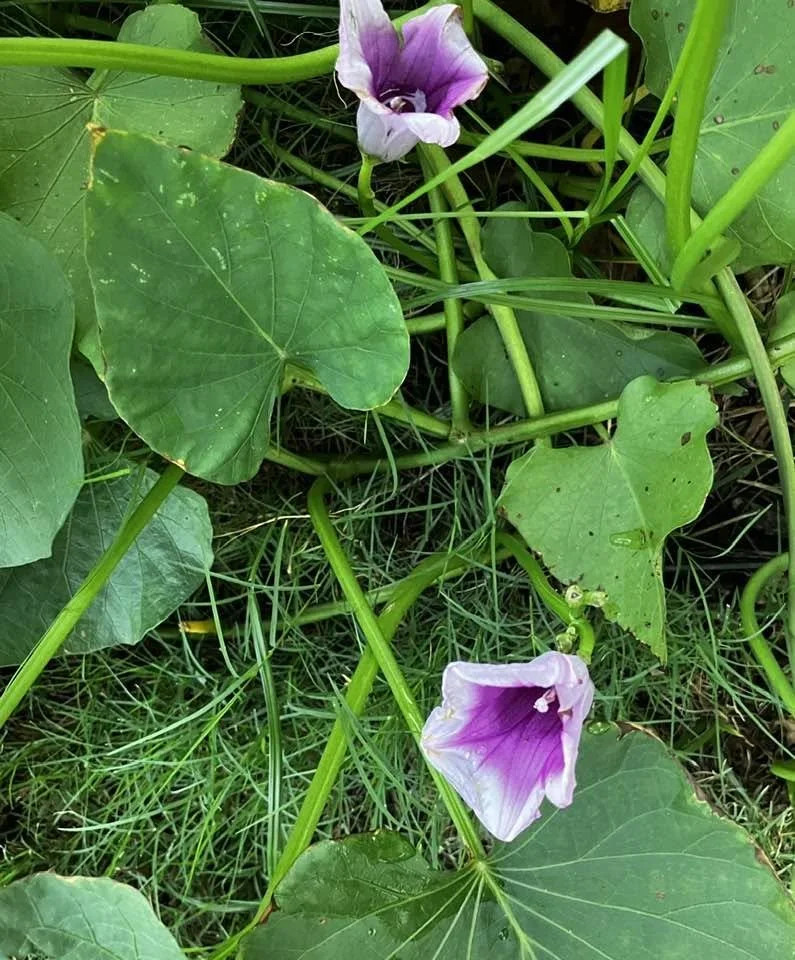
Three organic sweet potatoes became the source for the rooted sprouts (slips) I planted in my two gardens. The tubers sat moist and naked in an soil-lined pot for two months; by late June, the first slips they grew were in the ground. Regular sweet potatoes might have done the trick. But they are more likely to have been refrigerated or treated with sprout inhibitors and what you may get for two months of waiting and watering is rot.
**
The slips kept coming after that. Most ended up in the many-times amended soil of my community garden plot. The rest I planted in the clay-heavy earth of my small home garden.
**
Sweet potatoes do well under stressful conditions that can include low soil nitrogen and a dry growing environment. The plant will put most of its effort into storing energy underground and developing its roots rather than in growing leaves. Now that’s biological intelligence I can respect.
**
Rosy outsides, orange insides: this what we see now but not what always was.
**
Sweet potatoes traveled to North America through indigenous people coming from Central and South America. Europeans learned about the tuber from Natives; later, enslaved blacks used them to replace the African yams they would never eat again. Malnourished Confederate army soldiers and poor white Southerners during the Civil War relied on sweet potato greens scavenged for sustenance. Like mothers, they gave of themselves to anyone who needed the sustenance they could offer.
**
Tell me what you eat and I will tell you the worlds you consume.
**
Louisiana Agricultural Experiment Station researchers developed the “standard” orange sweet potato in the 1930s. Touting moistness that the original white, pale yellow and purple-fleshed Central and South American tubers did not have, researchers began marketing modern sweet potato in 1937. They called them yams to distinguish them from the paler sweet potatoes already on the market and they were wrong. Yams are monocots distantly related to lilies and sweet potatoes are part of the morning glory family.
**
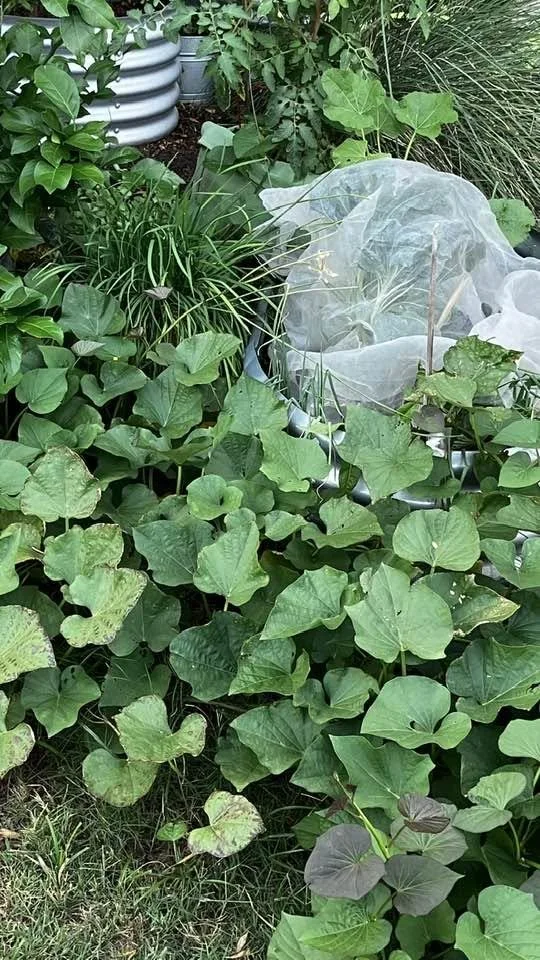
The community garden slips didn’t grow thickly or fast. Rather, they grew consistently over a hot, humid summer and in soil that needed daily watering to keep it from cracking. My home garden slips, by contrast, grew giant vines heavy with leaves especially during the early weeks of fall. It was the abundance of sun and perhaps the nitrogen from so much rain though not much else grew there except hardy long grasses and Texas red sage. Adaptability seems inbuilt: it’s the way of survivors.
**
In North Carolina the earth is sandy and sweet potatoes grow brilliantly, so brilliantly that fifty percent of the annual American crop comes from there. These humble vines took over after tobacco farming declined in the 1970s and by 1995, they were elevated to state vegetable.
**
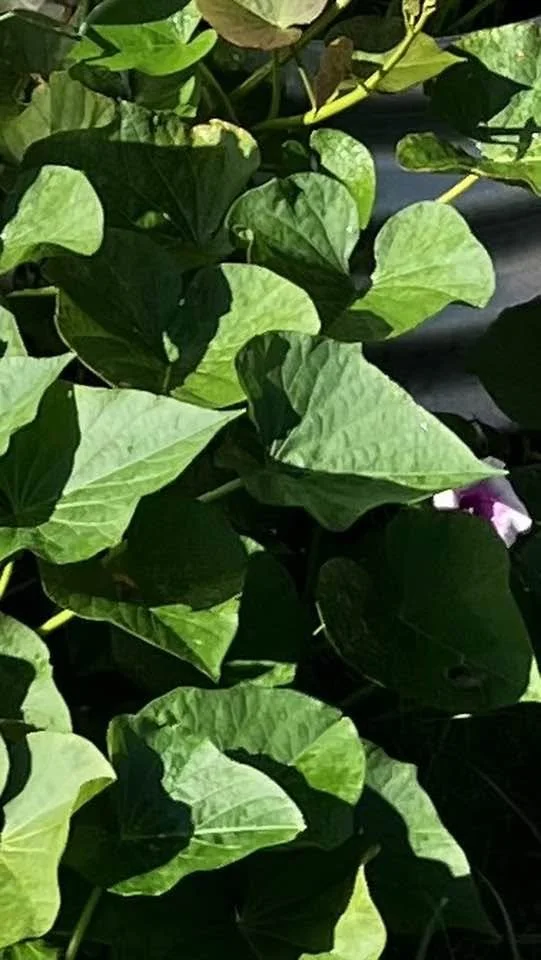
The vine flowers came up in October, a tender trumpets of faint lavender with throats of bright purple; but they only bloomed at home. It’s the balance of warmth, humidity and/or sunlight received that triggers flowering and the balance is different at my house and at the community garden plot. Sweet potatoes are tropical plants: to trigger flowering, they need eleven hours or less of sunlight to trigger flowering. And in North America, cooler, shorter autumn days are quickly followed by the colder days sweet potatoes do not tolerate. My house garden vines receive sun for only part of the day; that must be it.
**
The flowers surprised by their existence, by the slant sort of way they recalled Georgia O’Keeffe and her flowers. O’Keeffe kept gardens, too—at Alfred Stieglitz’s estate in New York and her ranch in New Mexico—and loved to sketch flowers and most famously, black irises. But my flowers were shy, not ruffly and teasing, like O’Keeffe’s irises.
**
Sweet potato vines are invasive and love to climb. I trained the ones at the community garden to grow around tomato twirlers that my tomato plants never appreciated. Now those vines have turned my small patch into something gorgeously whimsical.
**
Batata is the scientific species name for sweet potato flowers. They belong to the same family and genus, Convolvulaceae Ipomoea as does the common morning glory, purpurea. They are cousins that share short lifespans. Both flowers bloom at dawn then wither before evening.
**
Sweet potatoes and morning glories have their own symbolic meanings. Tubers are associated with resilience, grounding, new beginnings; and, especially among indigenous people and people of the African diaspora, ancestral connection. Morning glories signify renewal and awakening, but also ephemerality. In Victorian literature and on Victorian headstones, they symbolize eternal—or sometimes, unrequited—love. But sweet potato flowers don’t seem to have an identity beyond the vines where they grow. They simply crown a plant sacred to many.
**
Unlike morning glories, the fragile trumpet heads of sweet potato blooms hide among the deep green leaves of mature sweet potato vines. And they do not grow with the same kind of abundance because no one really ever expects to see them. That makes them rare in a way morning glories are not and all the sweeter for being the overlooked, unconsidered surprise.