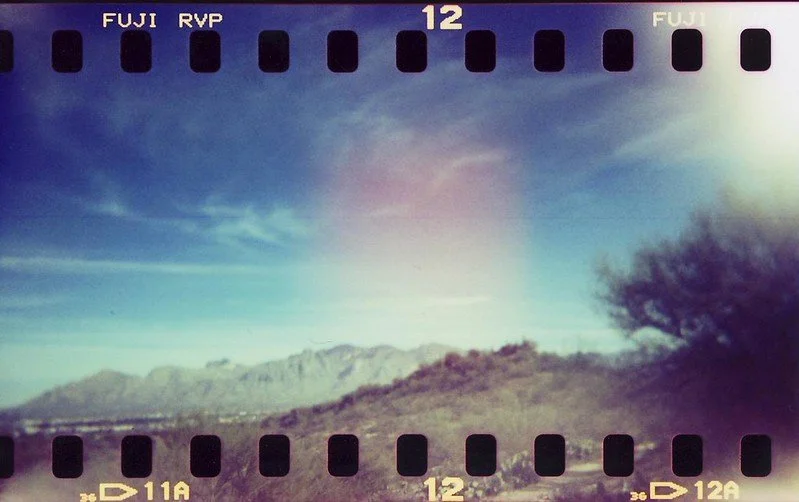
Saguaro National Park, Tucson, ca. 2006-07
In June, a heat dome that parked over the central, eastern and southern US but kept well to the north and east of Austin. Our 95 degree+ heat was moderate and felt more or less average despite periods of extreme humidity. Some days, though, have been dry enough to remind me of Tucson, where I lived for a decade. My love for days like these are always qualified by misgivings: no matter how seemingly pleasant, desert-like weather isn’t normal here.
**
The house I lived in for the first two years of my life as a desert dweller came with a dry-as-dust garden. My father was the one who owned the house and hadn’t lived in it for several months. He asked me to water the plants as a favor because he wanted to sell the property. Watering the garden soon became one of my chief pleasures when I began seeing how quickly the trees and shrubs recovered and how quickly violets that had died and left their seeds in the ground sprang up from hard, crusted earth.
**
Austin exists in a relatively protected climatological zone in south central Texas. That bubble is actually one of its strongest selling points for people considering a move to the southeastern part of the state. It’s far enough south to avoid the winter cold and springtime tornadoes that sometimes travel south from the Plains and far enough north of the coast to avoid summer storms from the Gulf and the Atlantic. Just how long that protection will last is anyone’s guess.
Extremes can still happen, though, and with breathtaking suddenness. A May 2025 hailstorm that developed from a wandering supercell damaged my neighborhood and destroyed most of my spring garden and left the rest of Austin untouched. And for two Julys in a row, sudden storms from the Gulf flooded counties 200 miles south and west of us along the Guadalupe River. We had rain enough to bring an already full Lake Travis to 100% of capacity for the first time since 2019.
That water will serve us well as we move into triple-digit days ahead. Between 1898 and 2024, the average number of 100 degree-plus days was 16. But statistics gathered between 1991 and 2020 show an average of 29 days—one month of ferocious, unforgiving heat.
**
Desert living suited me though I’d spent my childhood and adolescence within view of the Pacific. For six years after that I lived in Michigan. But even there, I wasn’t far from water, with Lake Erie just 35 miles to the southeast and Lake Michigan 120 miles to the west. Water still found us in the summer, though, with the arrival of monsoon season which typically began in June and ended by August or September. Storms would start in the heat of 100-degree afternoons, bring temperatures down into the 80s and leave the musky-sweet smell of creosote in their wake.
Tucson was six years into a drought when I arrived in 2000, the outgrowth of a geographical location defined by continuously dry/occasionally wet conditions. We didn’t worry as much about water shortages because Tucson was desert land that lived according to its own natural fire and water rhythms. I saw the land burn only once on a trip north into White Mountain high country. And I saw storms bad enough to cause street flooding in Tucson only twice in ten years. To our minds then, fires and floods were normal, not of evidence of climate change
It’s different now; attitudes are changing. Models for 2040 project that Phoenix, one hundred miles to the north, will still be habitable. But only just so. Both that city and others in Arizona will face challenges from higher temperatures, depleted aquifers and more restricted access to strained Colorado River reserves. Outdoor agriculture may no longer be possible; and urban development will emphasize density over dispersal. Life will be more limited to indoor environments and energy codes will be stricter to protect against deadly power grid failures.
It suffocates me just thinking about all the restrictions.
**
The lessons in climate adaptation I learned in the desert are serving me well here in Austin. The general rule was to be up at sunrise. If you wanted time outside or needed to run errands, 6 to 9AM were optimal times. Once that agreeable window of coolness and shadow closed, you retreated into a climate-controlled an interior space, a bottle of water, sunglasses and sunscreen always within reach just in case you had to go out again.
I water my gardens between 6:30 and 7AM, just as I did in Tucson; it’s the gardener’s “golden hour,” the time when the earth is coolest and plants absorb moisture best to prepare for heat. The days I have to be in town I’m tucked inside my cubicle by 9AM. The hard part is facing the furnace that is an Austin summer afternoon, intensified by the glass, concrete and asphalt environment of downtown that make me long for desert monsoons and the smell of creosote. Austin wasn’t always so built up and crowded. When I arrived in 2013, the population was 875,000; now it is at one million. By 2040, the entire metro area could grow to more than four times that size.
All while tech billionaires build water-hungry data centers everywhere they can and dream of sending them into space where they will destroy our planet’s already-compromised ozone layer.
**
Much of what we are currently doing—to the Earth and by extension, ourselves—is unsustainable long-term. Something will eventually break; is already breaking. And the healing gardens that could have grown from seeds buried in the soil will remain trapped underground, like forgotten memories of what might have been.