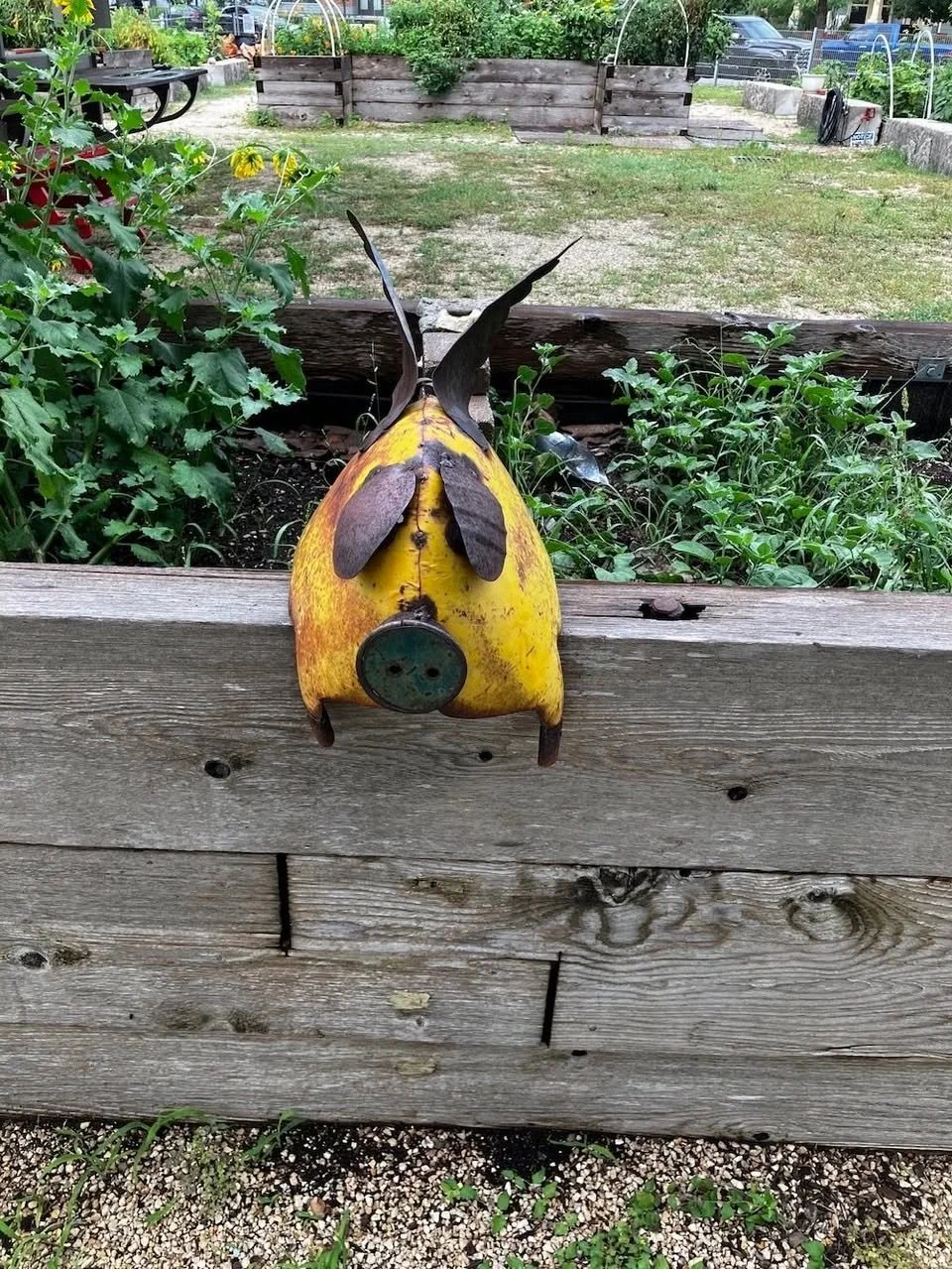
The genius loci of my neighborhood community garden
Peace is hard to come by these days. Maybe that’s why, when I’m at home and away from the mess of a work week spent downtown, I spend a lot of time either in the small garden I made for myself after all the stock-house plants died or at the community garden plot I’ve been renting since 2025. The work of growing and maintaining green things feels like an silent conversation with the earth. That silence heals; but even as I bathe myself in quiet, I can still sense the world’s din at the edges of stillness.
I came to gardening as a hobby. Since I started around 2015, I’ve learned to grow plants—mostly herbs at first—not only for pleasure but also to use as I cooked. Now, though, there seems to be an increasing sense that there’s more at stake. The “doomsday prepper” YouTube channels I’ve come across tell me that many people feel as I do. Looking around my neighborhood, though, it seems I’m the only one growing Swiss chard, kale and cherry tomatoes next to my front lawn. Maybe my neighbors know something I don’t, especially about HOA rules. But I’ve also planted enough flowers elsewhere to not only camouflage my agrarian aspirations but invite regular compliments on zinnias that not everyone knows can be used as an edible garnish.
Earlier this year, I noticed more people gaining access to community plots. A few long-time gardeners took it upon themselves to create do the work of plot distribution after I raised holy hell in 2025 about not getting one after years of filling out applications and never getting a response from the HOA. The center was a weedy ghost town when I arrived. Now it seems every time I go there to look after my plants, someone else is also there to looking after their greens, perhaps seeking their own solace as I seek mine. It’s a more active, better-tended haven of green in the heart of an urban neighborhood where space is at premium and yards—where they exist—are small.
An edible urban greenscape
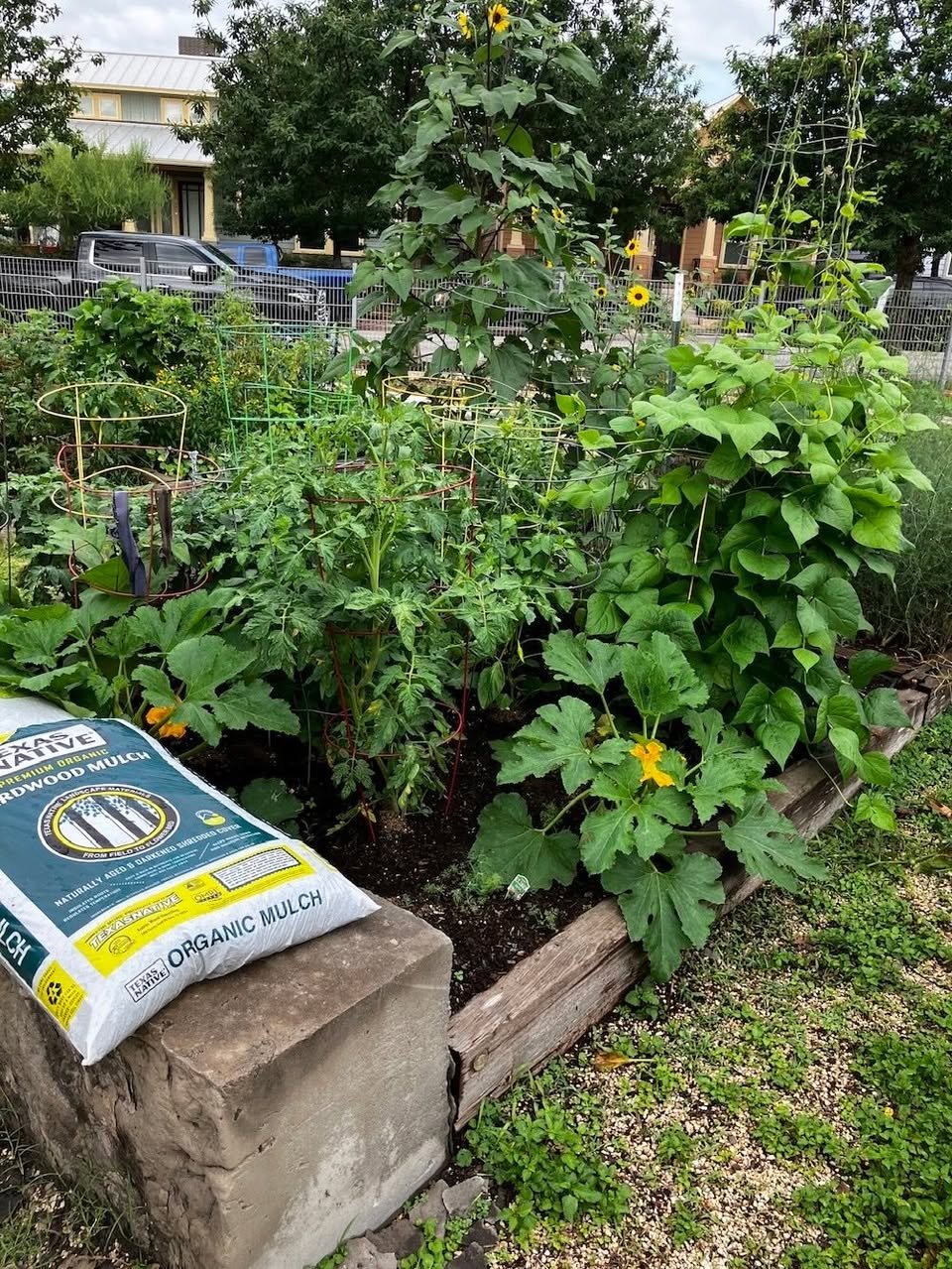
The plentiful rain this year means spring and summer bounty; better still, Lakes Travis and Buchanan are full enough that we gardeners don’t have to worry about water for a while. Or that a data center, like the one bringing forced rationing to residents of Corpus Christi, will take our water from us. The tech takeover is a fight for another day: right now, we have enough and at the moment, our community gardens look like a magnificent food forest. My mind drifts and sometimes I imagine people trading among themselves: a bell pepper for a cucumber, a crook neck squash or a zucchini for a melon. I wonder if other gardeners feel as relieved as I do to be in the midst of so much abundance; or if the ever envision scenes like this, too.
I don’t usually engage with other gardeners except on occasion and only to offer a brief hello. When conversation does arise, it’s usually about the different plants we are growing or the pests and fungi we are combating. It’s pleasant and light as a spring breeze because all of us are careful. Few ever talk about what surrounds us outside the cocoon of the garden and of the neighborhood; and rarely does anyone ever say the quiet part—that many of us are tending Victory Gardens—out loud.
If anyone ever does dare to do this, it’s usually me, though I am measured in what I say because words have the power to make the unspoken too real for people already on the edge. Mostly people nod their heads and don’t say much in return to my comments about Victory Gardens and inflating grocery bills. The door that closes in their faces tells me enough. They’ve come to the center to find peace from the big things they can’t control that threatens what too many native-born Americans born during the age of post-war prosperity have taken for granted—food, water and shelter.
Gardening for victory
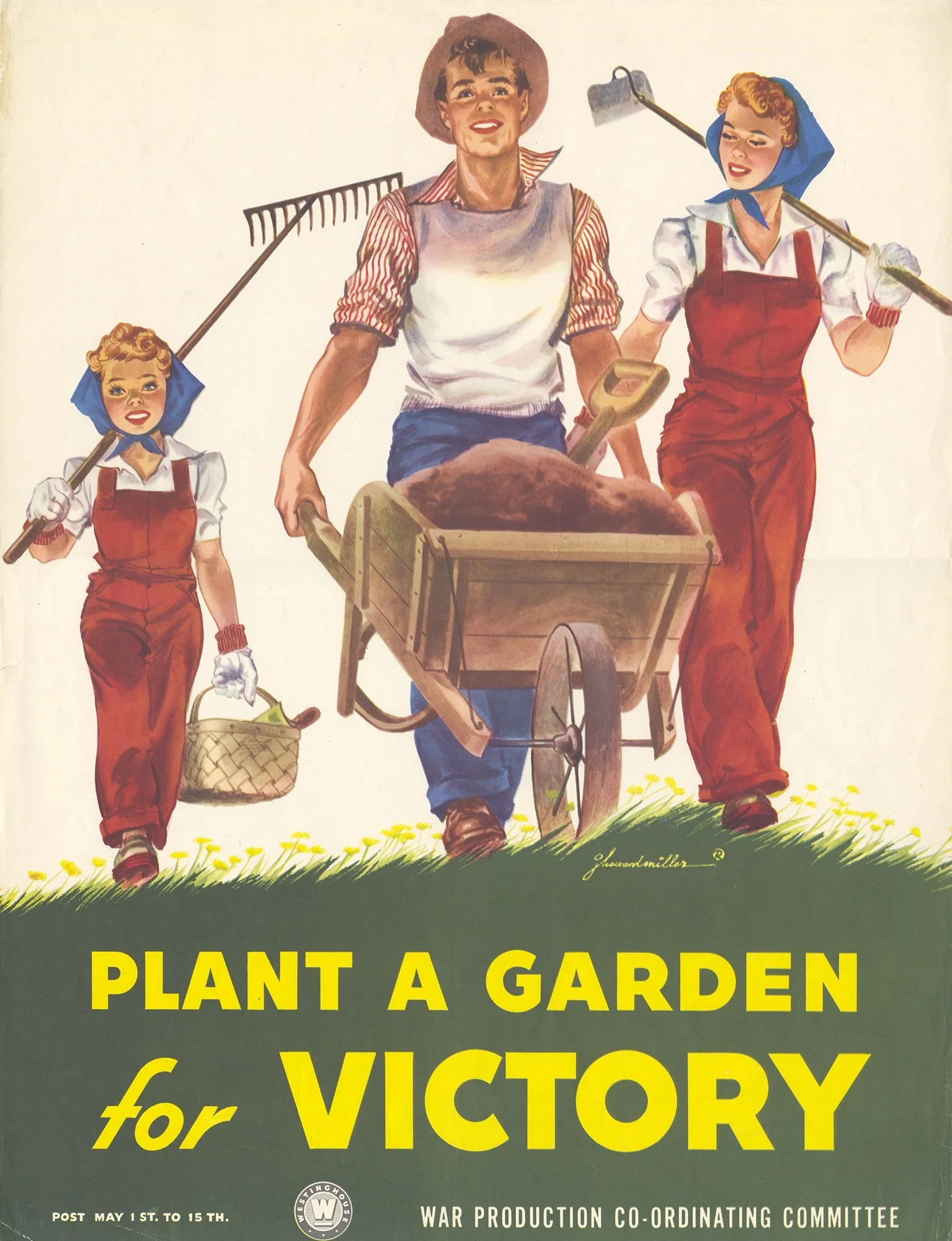
Victory Gardens became popular during the COVID pandemic—and especially during lockdown—though the actual concept emerged during the 1940s. Wartime labor shortages pushed the American food production system to its limits; gardening became an act of patriotism, solidarity and community. These gardens are celebrated and remembered through colorful government posters meant to inspire the public to action. Yet few remember how the Victory Garden concept developed from less glamorous “relief gardens” families and communities kept a decade earlier. Stark black-and-white Photographs document these gardens and the years that nearly broke America and the world, but they do not celebrate them.
There’s no need to shout about the problems that gardens temporarily screen from view when events so huge we can barely comprehend them are driving some to act in a silence that may actually be a kind of “necessary” denial. So I smile and don’t talk about the young gardener couple who whose apartment costs twice as much per month as I pay for the mortgage on one of a handful homes built for moderate income families. Or about the family who comes to tend a double plot that looks like the produce aisle at the local market. They may speak a language I can’t understand but their actions speak louder than words.