Portrait of the artist as an NYC sewer rat.
A recent Banksy exhibition on the Austin southside turned into an endurance test I never expected. I wasn’t prepared for the plunge in sauna bath heat, my reaction to it, or a steel-ribbed Quonset Hut venue with fans that moved hot air but didn’t cool it. Revival required a cold splash of water to the face followed by a twenty-minute collapse on a toilet in the air-conditioned restroom next to the gallery. Banksy’s art is meant to disconcert; and while he had nothing to do with the appalling weather—or the super El Niño fueling it far away in the Pacific—I was definitely in the right place.
It took me the better part of an hour to acclimate after I emerged from my protective bathroom stall. And oddly, that felt appropriate. All of it—the body-melting walk to the gallery, the stark, in-your-face lithographs and installations that confronted me when I finally arrived—felt very Decline of Western Civilization and note just because of its punk rock inflections. The West, the United States, and every other part of the globe seemed to be deteriorating on every level imaginable and sinking into chaos and cacophony; and the wailing punks in Decline seemed to have foretold everything,
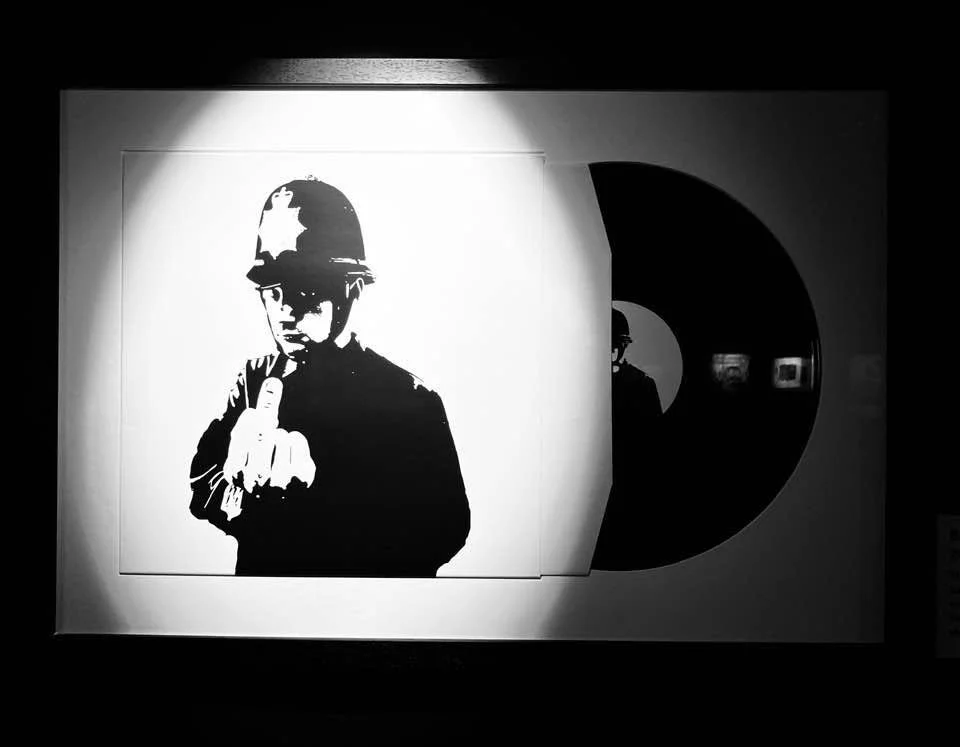
The lithographs had the simplicity that comes from using stencils, Banksy’s primary tool for creating quick public imprints with spray paint. Like the other exhibits, they relied on a punk rock color-schemes: black and white with splashes of red, green or 80s-style screaming neons. I felt completely at home: the aesthetic and cultural references came from what I knew growing up in the 70s and 80s and the wit present in his work blended dark humor with the bite of late twentieth century nihilism. No one knows much about Banksy except that he is British male who cultivates an anonymity that has kept the art world guessing for three decades. I would add that he’s likely Gen X because it takes one to know one.
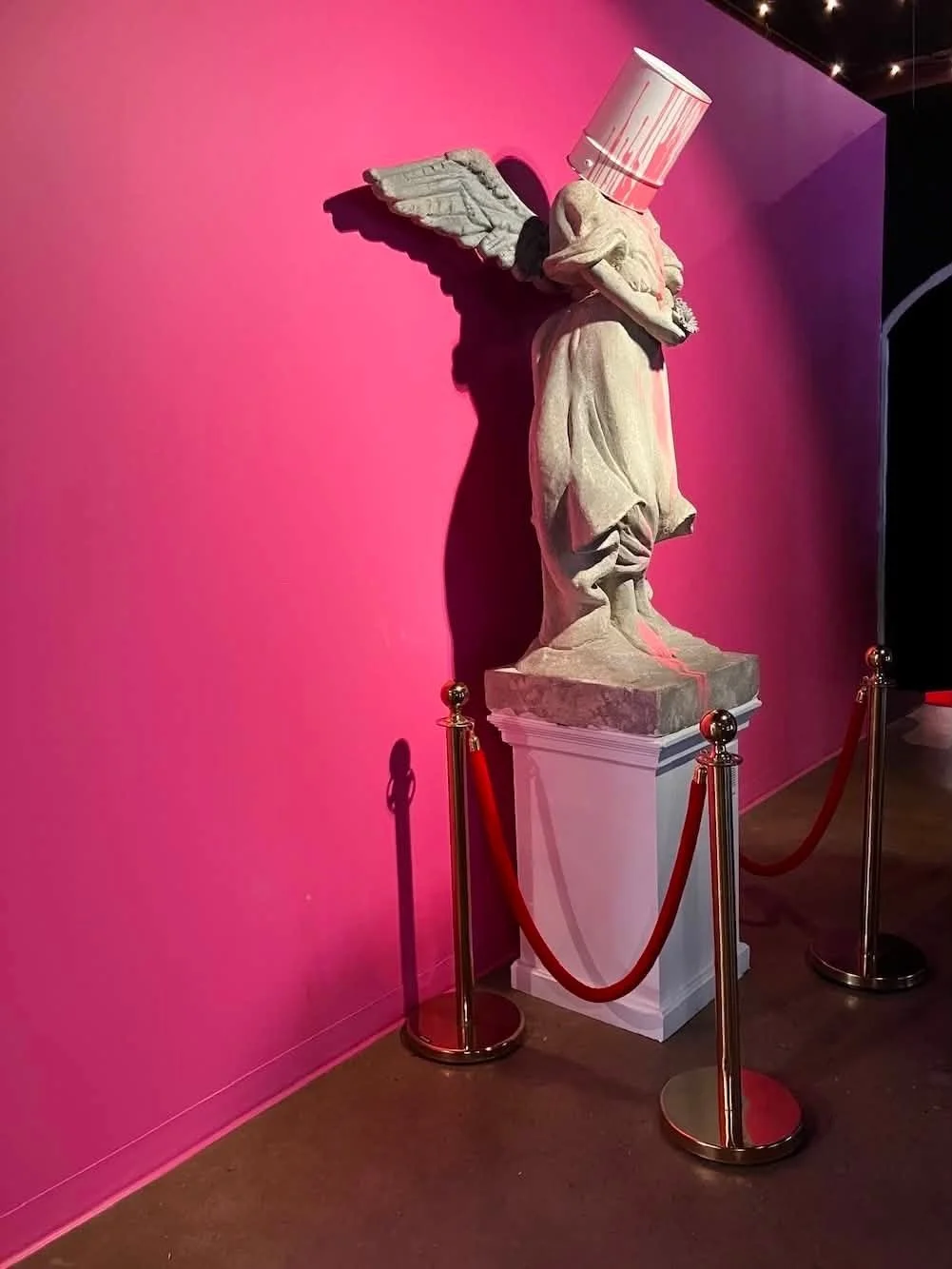
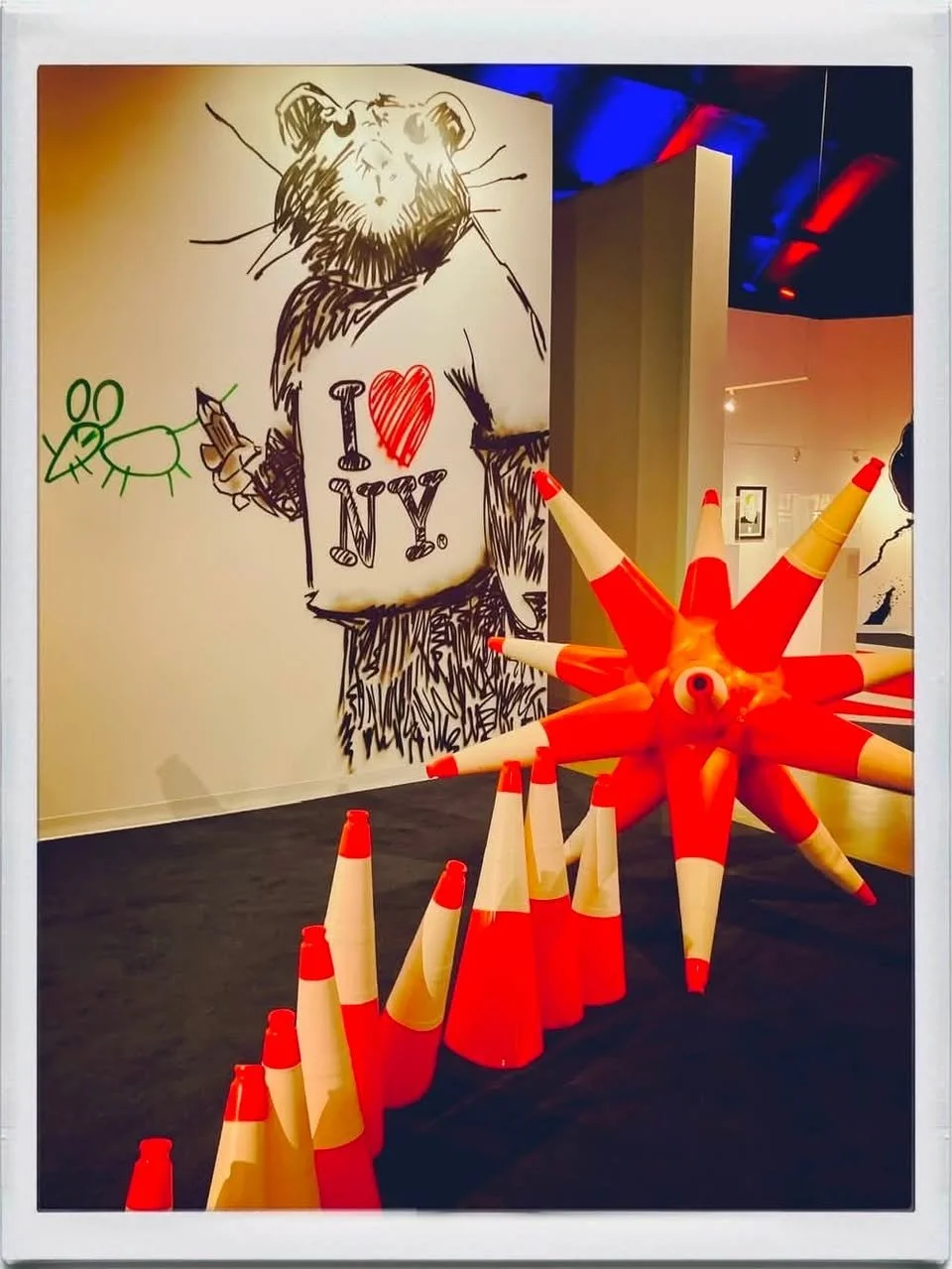
Queen Elizabeth, bird-flipping cops, refugee children and vandalized angels testified to the diversity of Banksy’s subjects. But rats seemed to be his favorites. One giant rat confronted viewers directly, wearing an I ❤️ NY t-shirt and drawing a stick-figure rat. I imagined Banksy, laughing at himself, the furtive urban artist who spray paints—or vandalizes, depending on your point of view—his images on buildings; but also envisioning the viewers contemplating his creations. We are all rats together running larger systems like mazes, he seems to say. But his message? If rats—which in one gallery image, carries a box cutter—know the real stakes, they will cut and run from hostile police states and propaganda, propaganda, propaganda.
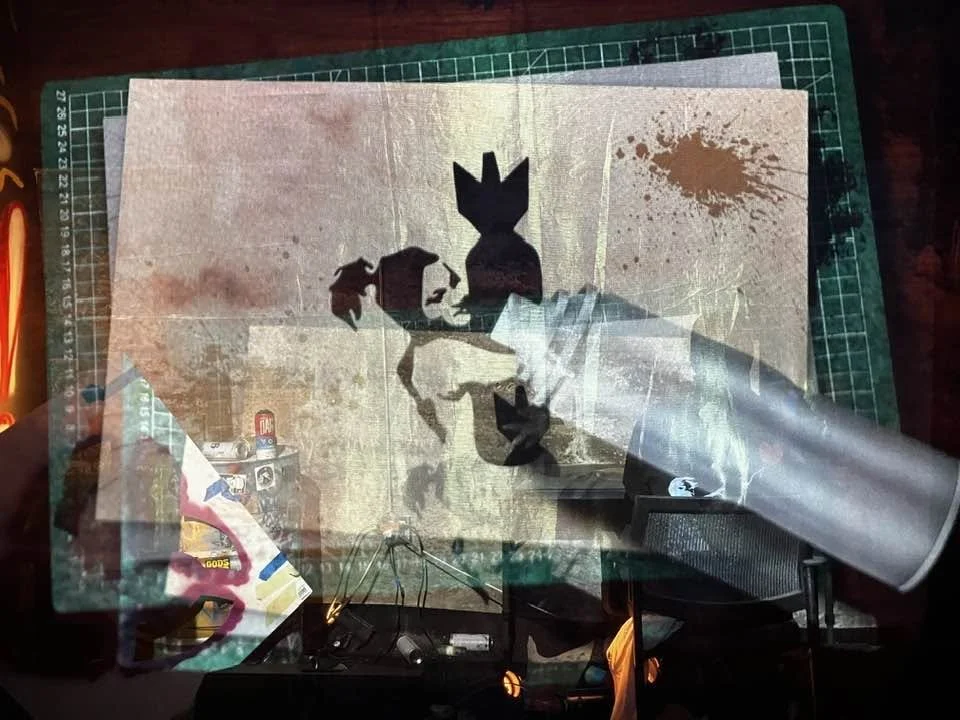
Though a small and apparently minor presence in Banky’s images, the box cutter was far more symbolically freighted than first appeared. While it implicitly referenced the “boxes” (or mazes) created by corporations, governments and all systems of power, it also pointed to 9/11 and specifically, the box cutter-carrying terrorists who passed through American airports. They managed to slip through security checkpoints armed, effectively beating a far larger and more threatening system.
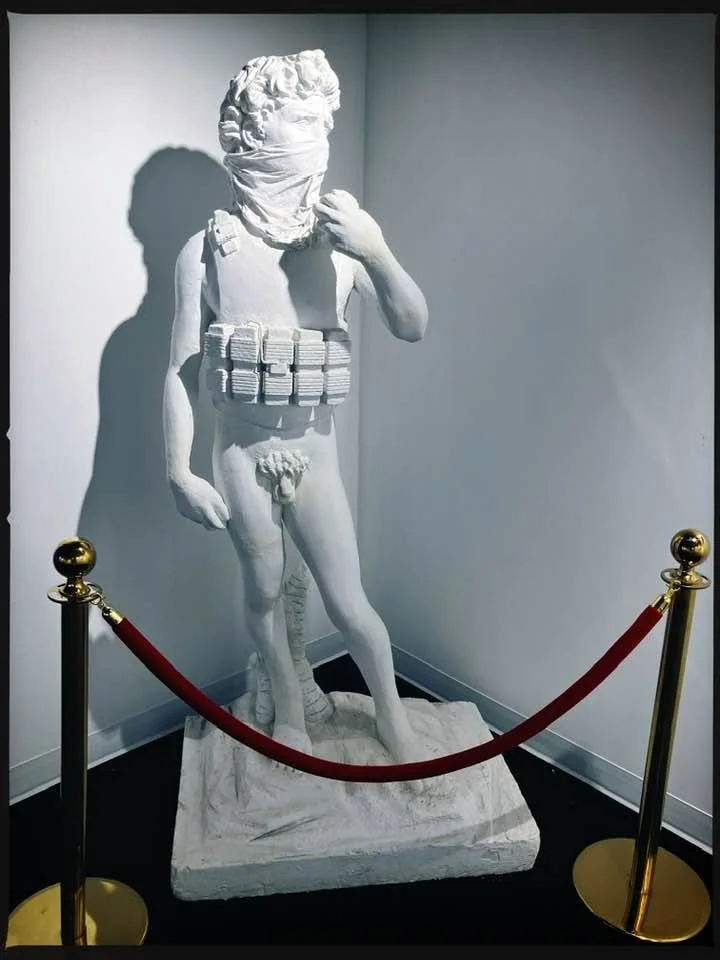
The message was clear. Art and terrorism are one and the same: like art, terrorism forces the powerful into awareness of the powerless, their resourcefulness, their desire for social justice. Banksy’s art forces observers out of their comfort zone and of their stupor that what appears is all that is. The installation featuring his reproduction of Michelangelo’s David depicted the statue wearing a bandana over his face, a Kevlar-style vest over his torso and an explosive gun belt over his waist. It is autobiography in stone and a symbol of survival. There is no escaping the world through fantasy exits; there is only the imperative to combat all forms of oppression by any means necessary and especially art.
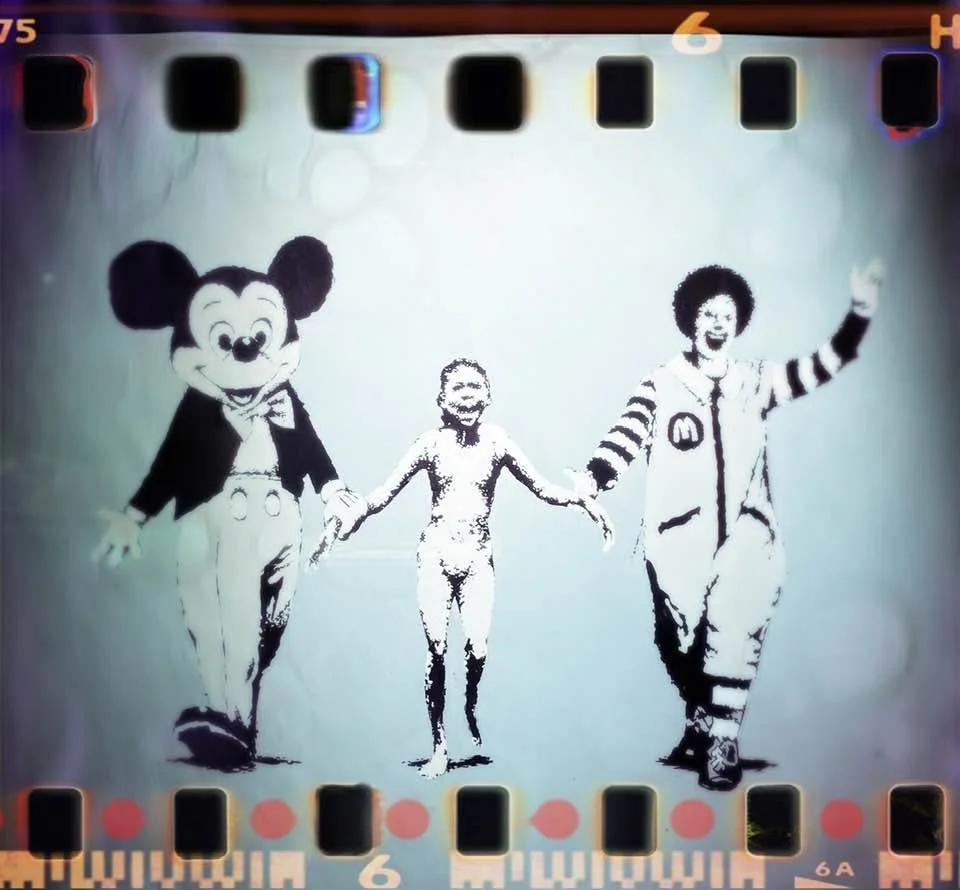
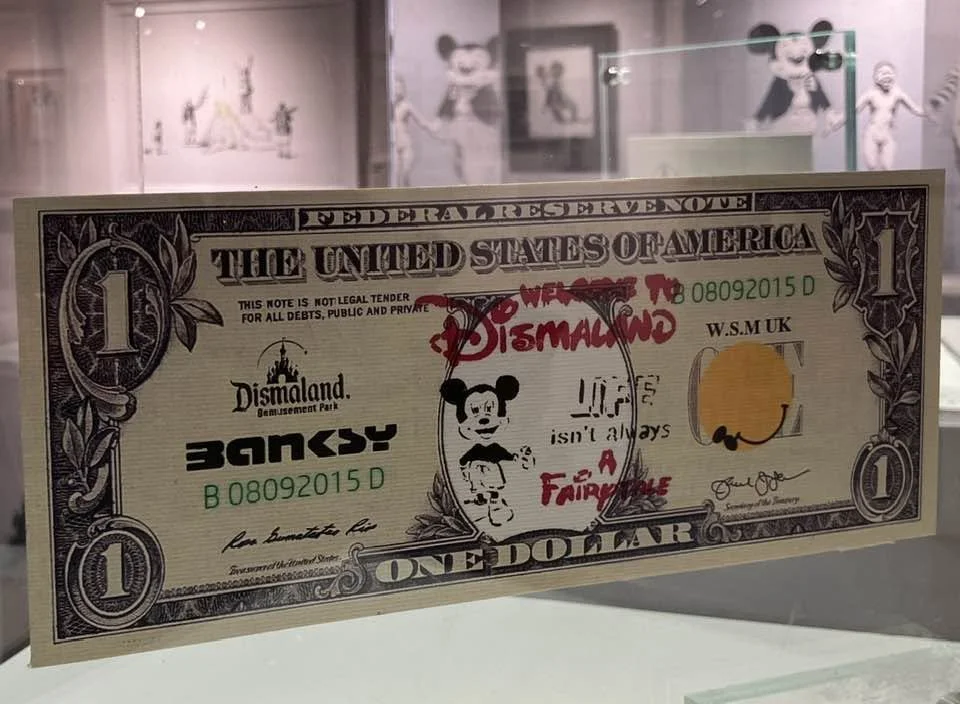
But in fleeing, rats must be wary of the retreats those in power create for us. Another part of the exhibition included small selections from a 2015 Banksy pop-up project in Weston-super-Mar, England called Dismaland. Rather than feature the life-sized crumbling fairytale castle that was the centerpiece, viewers saw small artifacts, like a dollar bill altered to feature Mickey Mouse in place of n George Washington. Another artifact, this one a lithograph, featured Mickey and Ronald McDonald, faces frozen in cartoon grins, walking hand-in-hand with the crying, screaming Life magazine “Napalm Girl” between them. All Western fairytales and wealth are built on wars and laying claim to the oil and mineral riches of developing countries like Vietnam. Greed strips the most vulnerable naked and puts them on parade.
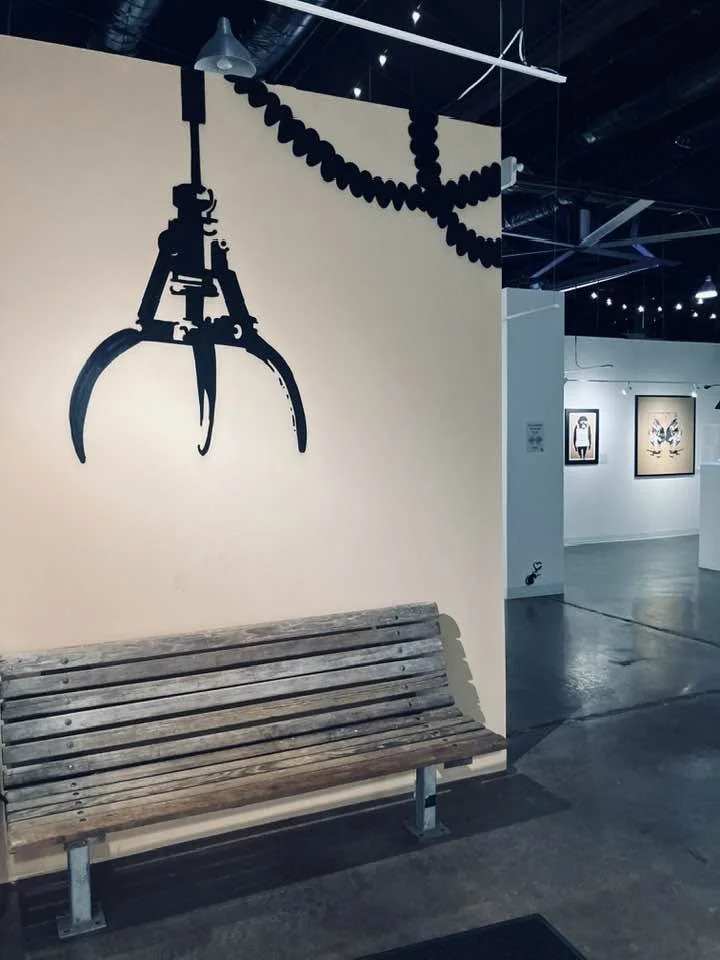
Capitalism, and its close kin homogeneity, wears disguises that appeal and sometimes even amuse. Buy into me and into what I represent, it seems to say. Find refuge among other passive and compliant sheep. But what it actually offers is cruel joke that quietly takes everything from us including our dreams—of escape, of fun, of joy, of some kind of sanity—and leaves us with broken husks. Because everything under capitalism is up for extraction by monstrous Industrial Age grabbing tools like the one I saw painted on a nearby gallery wall.
That the Dismaland exhibit was close to a gift shop that sold heavyweight $75 souvenir sweatshirts only magnified the discomfort. The heat pressing down on the gallery already felt smothering; and Banksy’s art—at least in the beginning—was never about profit and more about pushing back against institutionalized elitism and modern barbarities like colonialism, techno-fascism and the war-government-corporate complex.
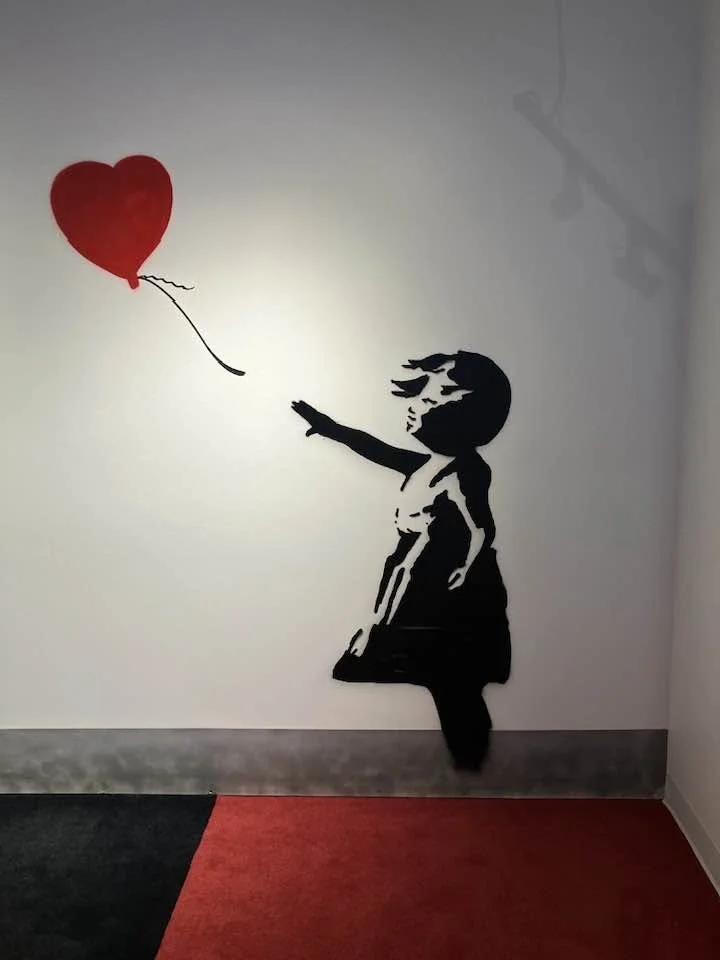
But it’s all fine and good because it’s all done with a wink, nod and smile to a man who has transformed street-wise anonymity into lucrative performance art. We are rats only valuable for what we do and not who we are nor the dreams that fly out of our grasp like balloons into the wind.