My elementary schoolmates, boys mostly, used to play a recess game called Smear the Queer. Teachers banned it because it was rough and had no rules. The kids still did it anyway, mobbing up on the small triangular playing field on the southeast corner of my school, elbowing each other as they chattered and giggled. Someone would toss a ball in the air then the free-for-all started. If the ball landed near you, you became the “queer,” the one who picked up the ball and bolted, trying to avoid the hard-boned tackle that would eventually take you down like hunter’s prey.
The name taunted as it warned. Be “queer"“—different or odd, as I understood it then—and other children, the ones with sun-tanned faces and limbs, long hair and surf shop t-shirts, would never let you forget it. I never played the game; tall and rangy, I was still a girl. More than that, I was the kid with the mother who insisted she had to walk me to and from a school just two blocks down the street. I had no wish to call even more unwanted attention to myself.
Like most childhood games, Smear the Queer taught lessons. Not the best ones, but ones that assured survival. Being part of the group, not sticking out in any way, meant security. Conform and you got by. But the conformity demanded went beyond having the right clothes and being the right level of cool. To conform—especially if you were male—meant being tough. No sissies or gay boys allowed. And if you were that rare tough girl who dared play, the message carried an extra homophobic warning. Play with the boys but don’t risk being taken for one because in life after puberty, girls are for boys and boys for girls.
If I remember that game now, that game I did not play, it is not just because I’ve spent the last ten years excavating my past for a book. Gender and sexuality, the struggle of being a woman who loved a charming, selfish runaway of a father but not the patriarchy that twisted his life and my mother’s, infuse the story I tell. A scholar of women’s literature, I probed stories for how female characters, straight and gay, cisgendered and not, navigated living among the men in whose image their worlds were made. My narrative was no different from the ones I studied and loved.
Some people may read the memoir as the story of a woman with a raging Electra complex…until they see Electra’s queer patina. As an adolescent, I gender-switched with abandon, slipping into dresses one day and clothes made for boys the next. It mystified my schoolmates but after a while they accepted it as an extension of what they saw as my general strangeness. The too-tall girl with the overprotective mother and foreigner parents who never mingled with their neighbors. All through junior high I crushed on boys and men, mostly my teachers; but in high school, I stumbled into platonic love with another girl who broke my heart with a devastation more pure and complete than any I’d know from almost every boy or man I who would ever enter—then exit—my life.
There was a boyfriend after that beautiful girl, but one who despite the intimacy and the love, sometimes turned my stomach for the way he felt like a brother. Other relationships followed. Yet the compelling connection that would make me want to stay was never there. Even when the emotional component existed, a connection of mind or spirit lacked. Once there was even a lover I did not want who came to me during a time of profound personal crisis. That was by far the worst of all my relationships for the role of victim he needed me to play and that I knowingly accepted because I had nowhere else to turn.
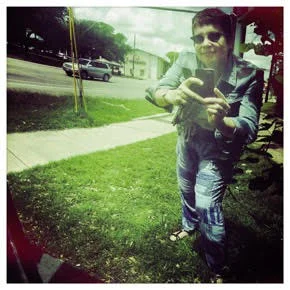
A beta reader told me he’d pegged me as a gender-bent demi-sapio sexual who could desire only when emotional and mental bonds existed. I hate labels but realized he was right. Though cisgendered, I have always been most comfortable presenting as a short-haired, hoodied androgyne in jeans. And when I desire, it is only when emotional and mental bonds are also present. In other words: I’m fringe straight. A gray-ace living between asexual and sexual, queer and not queer.
Personal traumas, many of them prolonged and co-extensive, have likely played a role in the “graying” of my sexuality, the remaking of Electra. Pain and loss pushed me at different times towards gay male friends and mentors. They were safe, they did not judge, they could laugh at themselves and were just plain fun to be around. And when a twist of fate sent Electra reeling, she remembered those friends and mentors and fled straight into heart of their community where she learned to embrace the maligned rainbow of difference she had carried with her since childhood.
Living in a post-climateric female body has no doubt contributed to my grayness. Simone de Beauvoir openly lamented the loss of desire in her Memoirs of a Dutiful Daughter; other women I admire like Gloria Steinem and Germaine Greer have looked at it with some regret, but always with the idea that, as Steinem has famously said, “what we keep is what we need to support ourselves.” I feel no need as perhaps I did in my youth for the connection that would make me magically whole. To use a term Emma Watson once employed to describe her singleness, I am “self-partnered.”
What gives me hope these days is what I and others, like queer feminist scholar Llliian Faderman in her newest book, Woman: The American History of an Idea, have observed among members of Generation Z. They have been coming of age at a time when the “rules” to gender/sexuality naming (and shaming) longer apply. Like the transmen and women who took American by storm in the 2010s—Janet Mock, Chaz Bono, Caitlyn Jenner and Laverne Cox to name a few—even if they are straight, they don’t like labels either. Instead they prefer to life off the gender/sex grid or by calling themselves genderfluid and/or non-binary. Some identify as LGBTIA +, some do not. Neither male or female, masculine nor feminine, they are simply humans who, in living their truths, smear straight with queer and queer with straight, obliterating boundaries.